

Nestled in the southwestern corner of Uganda, where the mist-laden highlands meet the ancient forests of the Albertine Rift, lies one of Africa’s most extraordinary wilderness areas — Bwindi Impenetrable Forest National Park. Covering approximately 331 square kilometres (128 square miles), this dense, primeval forest stands as one of the oldest and most biologically diverse ecosystems on Earth, having survived the last Ice Age largely untouched for over 25,000 years.
Designated a UNESCO World Heritage Site in 1994, Bwindi is perhaps best known as the last stronghold of the endangered mountain gorilla (Gorilla beringei beringei), hosting nearly half of the world’s remaining population. But beyond its gorillas, the park is an ecological marvel — a living tapestry of towering montane trees, rare orchids, colourful birds, and endemic wildlife that draws scientists, conservationists, and travellers from every corner of the globe.
To visit Bwindi is to step into a world that time has barely touched — a place where human footsteps follow ancient animal trails, and where conservation and community walk side by side.
Historical and Cultural Background
The name “Bwindi” derives from the Rukiga word Omugyerezi, meaning “place of darkness,” a fitting description for a forest so dense that sunlight struggles to penetrate its canopy. Local communities, particularly the Batwa pygmies, inhabited and depended upon this forest for thousands of years before it was gazetted as a forest reserve in 1932 and later elevated to national park status in 1991.
The Batwa, often called the “Keepers of the Forest,” lived as hunter-gatherers within Bwindi’s boundaries for millennia. Their eviction following the park’s establishment remains a deeply contested chapter in Uganda’s conservation history, and today, various programmes aim to integrate Batwa cultural heritage into tourism while providing the community with sustainable livelihoods.
The park sits at the intersection of the Congo Basin forests and the East African savannah biomes, a meeting of ecosystems that explains its extraordinary biodiversity.
Geography and Ecology
Kenya safari and Bwindi spans elevations from approximately 1,160 metres to 2,607 metres above sea level, creating a remarkable range of microclimates and habitats within a relatively compact area. The terrain is rugged and mountainous, characterised by steep ridges, rushing streams, and valleys blanketed in thick undergrowth — terrain that gave rise to its “impenetrable” reputation.
The forest is classified as an Afromontane rainforest, one of the most threatened forest types in the world. Unlike many African parks that suffer from deforestation and fragmentation, Bwindi has maintained much of its ecological integrity, making it an irreplaceable reservoir of biodiversity.
Flora
Bwindi impenetrable forest national park harbours more than 1,000 plant species, including over 100 species of ferns and 163 species of trees and shrubs. Some of the most ecologically important species include the African rosewood (Hagenia abyssinica), giant lobelias, tree heathers, and numerous orchid species. The forest floor is carpeted with mosses and lichens, while the canopy reaches towering heights of 45 metres in some areas.
Fauna
Beyond the mountain gorillas, the park supports an impressive array of wildlife:
- Mammals: Chimpanzees, elephants, African golden cats, giant forest hogs, and over 120 mammal species
- Primates: Eight primate species in total, including red-tailed monkeys, black-and-white colobus monkeys, and L’Hoest’s monkeys
- Birds: Over 350 bird species, 23 of which are Albertine Rift endemics, including the African green broadbill, Grauer’s swamp warbler, and Shelley’s crimsonwing
- Reptiles and Amphibians: More than 200 species of butterflies, 27 frog species, and numerous chameleons and lizards
The Mountain Gorillas of Bwindi
No discussion of Bwindi is complete without centering on its most iconic inhabitants — the mountain gorillas. Once on the brink of extinction with fewer than 250 individuals recorded in the 1980s, the global population has recovered to approximately 1,063 individuals as of the most recent census, thanks largely to conservation efforts in Uganda, Rwanda, and the Democratic Republic of Congo safaris.
Bwindi is home to more than 400 mountain gorillas, spread across multiple gorilla families. The Uganda Wildlife Authority (UWA) has inhabited more than 20 gorilla groups for tourism and research purposes, allowing controlled, closely monitored encounters with these magnificent primates.
Gorilla Trekking
Gorilla trekking is the centrepiece of Bwindi’s tourism offering and one of the most sought-after wildlife experiences in the world. Trekking groups are limited to eight visitors per gorilla family per day, ensuring minimal disturbance to the animals. Upon locating a gorilla family — a process that can take anywhere from 30 minutes to several hours depending on the gorillas’ movements — visitors are granted exactly one hour in their presence.
The experience is transformative. Mountain gorillas share approximately 98% of their DNA with humans, and spending time in the presence of a silverback — often sitting within metres — is a humbling encounter that many describe as a life-changing event.
Trekking sectors include:
- Buhoma (north) — the oldest and most developed sector
- Ruhija (east) — higher elevation, good for birdwatchers
- Rushaga (south) — largest number of habituated groups
- Nkuringo (southwest) — dramatic landscapes and remote feel
Gorilla permits cost USD 800 per person (2024 rate), with funds directly supporting conservation and community development programmes.
Conservation Challenges and Successes
Rwanda safaris and Bwindi’s story is as much about conservation triumphs as it is about ongoing challenges.
Threats
- Human-wildlife conflict: As local populations grow around park boundaries, crop raiding by gorillas and elephants creates tension between communities and conservation authorities.
- Disease transmission: The genetic similarity between gorillas and humans makes disease transmission a serious risk. Strict protocols — including minimum approach distances and mask-wearing — are enforced to protect gorilla health.
- Climate change: Shifting rainfall patterns and temperature increases threaten the forest’s delicate ecology.
- Poaching: Although significantly reduced, snares set for other animals can injure gorillas.
Successes
- The mountain gorilla population has grown consistently over the past three decades.
- Community-based conservation programmes, such as revenue-sharing schemes that direct tourism income to local villages, have built strong local support for the park.
- The Gorilla Doctors programme provides veterinary care to ill or injured gorillas.
- International partnerships between Uganda, Rwanda, and DRC have harmonised transboundary conservation efforts.
Visiting Bwindi: Practical Information
When to Visit
Bwindi can be visited year-round, but the dry seasons (June–August and December–February) offer the easiest trekking conditions. The wet seasons bring lush greenery and fewer tourists but can make trails slippery.
Getting There
Bwindi impenetrable forest national park is approximately 530 kilometres from Kampala, Uganda’s capital. Road journeys typically take 8–10 hours. Many visitors opt for domestic charter flights to Kihihi or Kisoro airstrips, which reduce travel time significantly.
Accommodation
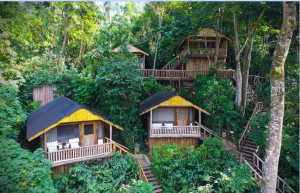
Options range from luxury lodges perched above the forest canopy — such as Bwindi Lodge and Clouds Mountain Gorilla Lodge — to mid-range tented camps and budget guesthouses in surrounding communities.
Beyond Gorilla Trekking
- Gorilla habituation experience: Spend up to four hours with a newly habituating gorilla family
- Chimpanzee tracking
- Birding walks
- Batwa cultural trail: Learn about the indigenous Batwa people’s traditions, forest knowledge, and history
- Community walks through tea plantations and local villages
Key Takeaways
Tanzania safaris and Bwindi Impenetrable Forest National Park is not merely a destination — it is a living testament to what conservation, community, and commitment can achieve.
- Bwindi is one of the world’s oldest rainforests, surviving largely unchanged for over 25,000 years.
- It is a UNESCO World Heritage Site and one of Africa’s most biodiverse protected areas.
- The park shelters nearly half the world’s mountain gorilla population, a species brought back from the brink of extinction.
- Gorilla trekking permits (USD 800) directly fund conservation and local communities.
- With over 350 bird species and 1,000+ plant species, Bwindi offers experiences far beyond gorilla encounters.
- The Batwa indigenous community has deep historical ties to the forest, and cultural tourism provides a vital bridge between conservation and community rights.
- Responsible tourism, strict regulations, and international cooperation have made Bwindi a global model for wildlife conservation.
- The best trekking conditions are during the dry seasons: June–August and December–February.
- Bwindi is accessible via road from Kampala (~10 hours) or by domestic charter flights.
- Conservation challenges including climate change, disease risk, and human-wildlife conflict require continued vigilance and adaptation.
Frequently Asked Questions (Q&A)
Q1: How many mountain gorillas live in Bwindi Impenetrable Forest?
As of the most recent population census, Bwindi impenetrable forest national park is home to more than 400 mountain gorillas — representing roughly half of the global mountain gorilla population of approximately 1,063 individuals.
Q2: How long does gorilla trekking take?
The total duration of a gorilla trek varies considerably. The hike to locate a gorilla family can range from 30 minutes to over 6 hours, depending on the gorillas’ location that day. Once found, visitors spend exactly one hour with the gorillas. Most treks, including transit and briefings, occupy a full day.
Q3: Is gorilla trekking physically demanding?
Yes. The terrain in Bwindi is steep, often muddy, and requires navigating dense vegetation. A reasonable level of physical fitness is recommended. Porters are available for hire and provide invaluable assistance on steep sections while also supporting local livelihoods.
Q4: Is it safe to visit Bwindi?
Bwindi is considered safe for tourists. Uganda has maintained stable conditions in the Bwindi region, and the park is well-managed by the Uganda safaris Wildlife Authority. Standard travel precautions apply, and visitors should check current government travel advisories before planning their trip.
Q5: What is the difference between gorilla trekking and the gorilla habituation experience?
Standard gorilla trekking allows visitors one hour with a habituated gorilla family (groups of up to eight). The gorilla habituation experience allows up to four hours with a gorilla family that is still in the process of being accustomed to human presence. It is a more immersive and research-oriented experience, limited to four visitors, and carries a higher permit cost.
Q6: Can children participate in gorilla trekking?
The minimum age for gorilla trekking in Uganda is 15 years. This restriction exists primarily to protect the gorillas from diseases to which younger children may be more susceptible, and to ensure that participants can handle the physical demands of the trek.
Q7: Why is the gorilla permit so expensive?
The USD 800 permit fee is a deliberate conservation tool. A significant portion of the revenue is channelled into park management, anti-poaching operations, gorilla health programmes, and community development projects. High permit costs also limit visitor numbers, reducing pressure on gorilla families.
Q8: What should I pack for a gorilla trek?
Recommended items include sturdy waterproof hiking boots, long-sleeved shirts, long trousers, a rain jacket, garden gloves (for gripping vegetation), insect repellent, sunscreen, sufficient water, snacks, a camera, and binoculars. Neutral-coloured clothing is preferred to avoid disturbing the gorillas.
Conclusion
Bwindi Impenetrable Forest National Park stands as one of the natural world’s most extraordinary achievements — both as an ecosystem and as a conservation success story. In an era when wilderness areas are shrinking at an alarming rate, Bwindi endures: ancient, teeming, and resilient.
The forest’s mountain gorillas, once racing toward extinction, now number in the thousands — a remarkable reversal made possible by decades of dedicated conservation work, the commitment of Ugandan communities, and the curiosity of travellers willing to trek through mist and mud for the privilege of a single hour in the presence of our closest wild cousins.
Yet Bwindi’s significance extends far beyond its gorillas. Its ancient trees, rare orchids, endemic birds, and indigenous Batwa heritage represent an irreplaceable convergence of biological and cultural wealth. Every permit purchased, every community tour undertaken, and every conservation donation made contributes to the ongoing survival of this extraordinary place.
For anyone who has stood in Bwindi’s emerald half-light, watching a silverback move through the undergrowth with quiet authority, the experience is not easily forgotten. It is a reminder — urgent and humbling — of why wild places matter, and what humanity stands to lose should we fail in our responsibility to protect them.